Add to Technorati Favorites

Alter Egos - I Am Done Watching This

When clicking on an Alter Egos in the sidebar, please look above this title for video content.

Tuesday, January 30, 2007

The Natural Burial Ground of Literature


So your book has died a natural death. You have considered embalming but feel it is environmentally unsound. Let Dead Beat recommend an eco-cemetery. In this natural burial ground the body of your work returns to nature in a biodegradeable fashion. A memorial tree is planted above the grave. The decomposition of the body provides the nutrients the tree needs to survive.


This then is the secret to great writing: writing which participates in the natural cycle of life. Watch it live, guide it to its death, and encourage its decomposition.


Write on fellow Dead Beaters. There is nothing to fear from death.

Living Among the Untrodden Ways

SHE DWELT AMONG THE UNTRODDEN WAYS

She dwelt among the untrodden ways
Beside the springs of Dove,
A Maid whom there were none to praise
And very few to love:

A violet by a mossy stone
Half hidden from the eye!
--Fair as a star, when only one
Is shining in the sky.

She lived unknown, and few could know
When Lucy ceased to be;
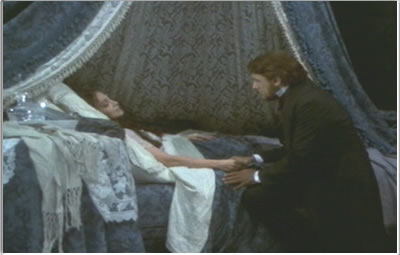
But she is in her grave, and, oh,
The difference to me!

William Wordsworth

Monday, January 29, 2007

All Good Writing Dies When The Last Period Is Hammered Into Place


It would be wrong to interpret Dead Beat's thesis that all good writing dies when the last period is hammered into place as an incitement for murder.

There are enough writers out there murdering their work with little regard.

No, what Dead Beat is talking about is a natural death.

A really fine piece of writing dies naturally once it is completed. It stops breathing, and its heart stops beating.

It enters then, I guess, the afterlife where it can be read, interpretted, reinterpretted. But it cannot be relived. It can be experienced in new ways, and much can be learned from it, but it is nevertheless a thing of the past.

The important thing for writers therefore is to bring their work all the way to its conclusion. To live out each and every breath in the writing and rewriting, to leave no aspect of its life unlived.

Whether it be a poem or a story, a memoir or a novel, an essay or a script the writer must stay with it to the end, listen out for its last breath, feel its final pulse. Then and only then can it be let go.

Don't grieve for too long - find another piece of writing - guide it to its death.

Saturday, January 27, 2007

What Al Said

Dead Beat appreciates your comments greatly (as long as they are not about cheap medications or even cheaper images of obscure body parts). This one then from Al on Premature Burial


AL said...

I tell ya Dead Beat, last week I was sure my story was deceased. I performed the necessary rituals, then laid the work to rest. I tied one end of a string to the forefinger of its right hand and the the other end of the string to a bell, just in case I was mistaken. Then while working the graveyard shift(?) I heard a faint but clearly audible ringing. The story, she was not deceased, had not passed on, didn't die, she was... a... dead ringer.

Japanese Death Poems


So Snyder gets on to Dead Beat.

"If you are going to talk about Death," he chides, "don't leave out the Japanese Death poems. Got that Dead Beat."

"I hear you Gary. I am always listening out for you."

So Dead Beat offers these up:


Hosshin, 13th century

Coming, all is clear,
no doubt about it.
Going, all is clear,
without a doubt.

What, then, is all?


Shoro, died April 1894, at age 80

Pampas grass, now dry,
once bent this way
and that.


Goku Kyonen, died October 8, 1272, at age 56

The truth embodied in
the Buddhas

Of the future, present,
past;

The teaching we
received from the

Fathers of our faith

Can be found at the tip
of my stick.


Gesshu Soko, died January 10, 1696, at age 79

Inhale, exhale

Forward, back

Living, dying:

Arrows, let flown each to each

Meet midway and slice

The void in aimless flight --

Thus I return to the source.


Shinsui, died September 9, 1769, at 49

O

During his last moment, Shisui's followers requested that he write a death poem. He grasped his brush, painted a circle, cast the brush aside, and died.
The circle is one of the most important symbols of Zen Buddhism. It indicates void -- the essence of all things -- and enlightenment
.

Friday, January 26, 2007

Avoiding Premature Burial - A Writers' Guide

Dead Beat like all good writers has a fear of premature burial (see The Book of the Dead). You don't want to bury your book before it has successfully died. So a few pointers for those other writers out there concerned enough about their craft to share the same worries.

First off, this is not a recent trend (indeed it has rarely been a trend among 'writers' at all - so many are happy to bury their work and move on without bothering to check for a pulse - many don't even bury it - just leave it to rot unattended) the fear of premature burial became more common amongst Nineteenth-Century Americans and Europeans. The fear arose out of the reputations of physicians who, lacking modern medical knowledge, (and often a medical degree), occasionally pronounced comatose or unconscious patients dead prematurely. The deceased would mirculously revive during funeral services, much to the dismay of friends and family.

Amazingly, despite modern medical knowledge (often accompanied by a slew of English and Creative Writing Degrees) many bodies of work pronounced dead are in fact still comatose, unconscious or downright upright dancing the polka in full view of everyone.

What to do about it?

Resurrect The Society for the Prevention of People being Buried Alive who recommended leaving the deceased lying in their caskets for days or weeks on end before being deemed sufficently dead to bury.

Other options include placing crowbars and shovels in the deceased's caskets; if they revive, they can dig their own way out. Also, recommended is a pipe that goes through the ground and into the casket, to be used for emergency communications.

Bateson's Revival Device is Dead Beat's preferred method to ensure that his work does not suffer a premature death. This device consists of an iron bell mounted on the lid of the casket just above the deceased's head. The bell is connected to a cord through the coffin that is placed in the dead's hand, such that the least tremor shall directly sound the alarm.

And yes indeed Dead Beaters, you ought to be alarmed if you bury your work prematurely.

(postscript: Bateson himself feared premature internment so powerfully that it is thought he was driven mad by his preoccupation. In 1886, he committed suicide by dousing himself with linseed oil and setting himself on fire

- always another option for work poorly prepared for death.)

Thursday, January 25, 2007

Nothing But Death - Pablo Neruda


Nothing But Death by Pablo Neruda


There are cemeteries that are lonely,
graves full of bones that do not make a sound,
the heart moving through a tunnel,
in it darkness, darkness, darkness,
like a shipwreck we die going into ourselves,
as though we were drowning inside our hearts,
as though we lived falling out of the skin into the soul.

And there are corpses,
feet made of cold and sticky clay,
death is inside the bones,
like a barking where there are no dogs,
coming out from bells somewhere, from graves somewhere,
growing in the damp air like tears of rain.

Sometimes I see alone
coffins under sail,
embarking with the pale dead, with women that have dead hair,
with bakers who are as white as angels,
and pensive young girls married to notary publics,
caskets sailing up the vertical river of the dead,
the river of dark purple,
moving upstream with sails filled out by the sound of death,
filled by the sound of death which is silence.

Death arrives among all that sound
like a shoe with no foot in it, like a suit with no man in it,
comes and knocks, using a ring with no stone in it, with no
finger in it,
comes and shouts with no mouth, with no tongue, with no
throat.
Nevertheless its steps can be heard
and its clothing makes a hushed sound, like a tree.

I'm not sure, I understand only a little, I can hardly see,
but it seems to me that its singing has the color of damp violets,
of violets that are at home in the earth,
because the face of death is green,
and the look death gives is green,
with the penetrating dampness of a violet leaf
and the somber color of embittered winter.

But death also goes through the world dressed as a broom,
lapping the floor, looking for dead bodies,
death is inside the broom,
the broom is the tongue of death looking for corpses,
it is the needle of death looking for thread.

Death is inside the folding cots:
it spends its life sleeping on the slow mattresses,
in the black blankets, and suddenly breathes out:
it blows out a mournful sound that swells the sheets,
and the beds go sailing toward a port
where death is waiting, dressed like an admiral.

The Book of the Dead - Dead Beat Gives Instructions for Preparing the Corpse of Writing


Dead Beat has been thinking about the death of writing (see haunting). If our duty as writers is to ultimately end up with a corpse, then we had better know how to prepare one for the afterlife.

And where better to get instructions than from The Book of the Dead.

Dead Beat is particularly intrigued by Mummification since so much of literature it would seem has been poorly mummified. So here then a few basic instructions:

1) Allow for a lengthy process spanning seventy days in some cases (you see too many writers are apt to rush to the finish line ignoring process along the way).

2) Remove all internal organs with one exception, the heart (no comment required).

3) If the body is not already West of the Nile, transport it across (too much writing has failed to make the necessary crossing due to fear and laziness).

4) Extract salt from the river banks and place under the corpse, on the sides, on top, and inside the body cavity to facilitate the process of dehydration (fill the body of your writing with salt - salt I say - nothing else will do).

5) After thirty-five days anoint the body with oil and wrap in fine linen.

6) Don the mask of Anubis and preside over the ceremonies to ensure proper passage into the next realm.


Go ahead folks. You have D.B.'s blessing. Trust me your writing will be the better for it - preserved.

Wednesday, January 24, 2007

The Haunting of Dead Beat


I guess it is the serious nature of writing that haunts Dead Beat the most. Even while John O Brien was drinking himself to death he continued to write books about the inevitability of his own young death -

Whoever said this was going to be easy?

Death of course is at the core of all great writing - it is the metaphor which drives the narrative - hastens it to a conclusion as the unending flow of alcohol hastens the conclusion.

All writing dies a death when the very last period is hammered into position. For sure we can talk about the afterlife - the afterlife of Leaving Las Vegas for instance - but death comes before the afterlife, sometimes with the barrel of a gun.

The real mistake is in believing that the writer is giving birth to a creation.

The writer therefore as killer? The writer as undertaker?

The writer surrounded by ghosts.

Tuesday, January 23, 2007

Bowery Blues

Jack hollered into the void: "This one is for O'Brien"
Dead Beat brings it to your ears.

Bowery Blues

The story of man
Makes me sick
Inside, outside,
I don't know why
Something so conditional
And all talk
Should hurt me so.

I am hurt
I am scared
I want to live
I want to die
I don't know
Where to turn
In the Void
And when
To cut
Out

For no Church told me
No Guru holds me
No advice
Just stone
Of New York
And on the cafeteria
We hear
The saxophone
O dead Ruby
Died of Shot
In Thirty Two,
Sounding like old times
And de bombed
Empty decapitated
Murder by the clock.

And I see Shadows
Dancing into
Doom
In love, holding
TIght the lovely asses
Of the little girls
In love with sex
Showing themselves
In white undergarments
At elevated windows
Hoping for the Worst

.I can't take it
Anymore
If I can't hold
My little behind
To me in my room
Then it's goodbye
Sangsara
For me
Besides
Girls aren't as good
As they look
And Samadhi
Is better
Than you think
When it starts in
Hitting your head
In with Buzz
Of glittergold
Heaven's Angels

Wailing

Saying
We've been waiting for you
Since Morning, Jack
Why were you so long
Dallying in the sooty room?
This transcendental
Brilliance
Is the better part
(of Nothingness
I sing)

Okay.
Quit.
Mad.
Stop.


Jack Kerouac